
Reclaiming Sacred Space
And Creating Your Own

I inhale sharply, awestruck, at the sight of the massive temple before me - one of the first we are visiting on our trip. I take in the brightly painted levels soaring up into the sky, the murmuring and jostling of the hordes of people streaming in and out through the massive stone entrance, the scent of the many fresh flower offerings trailing behind them. It is a far cry from the religious buildings I’ve experienced at home with their neatly scheduled services and evenly spaced pews. This place is a living, breathing portal for the people who live and worship here, the stored-up energy of close to a thousand years of pilgrims feeding its palpable energy. I leave my shoes with the hundreds of others outside the open entrance, drop briefly to touch my fingers to the worn circle in the center of the threshold, and step through into sacred space.
There are several theories on what makes a place sacred. One of the most famous is from Mircea Eliade, who maintained that the sacred erupts out of places in the land and is felt by humans, who then often build structures around it. These structures include a threshold, which one crosses to enter into sacred space. On the other end of the spectrum is Emile Durkheim, who believed that sacred space is created and then maintained by the thoughts, beliefs and deliberate tending of those who made it. I ponder these opposing views as I cross the threshold and my bare feet connect with the stone floors of the temple, worn smooth by the hundreds of thousands of feet that have walked them before mine, and decide again that both can be true – the existence of sacred places in the landscape, whether we notice them or not, and the energies that accumulate over time when a place is tended and revered.
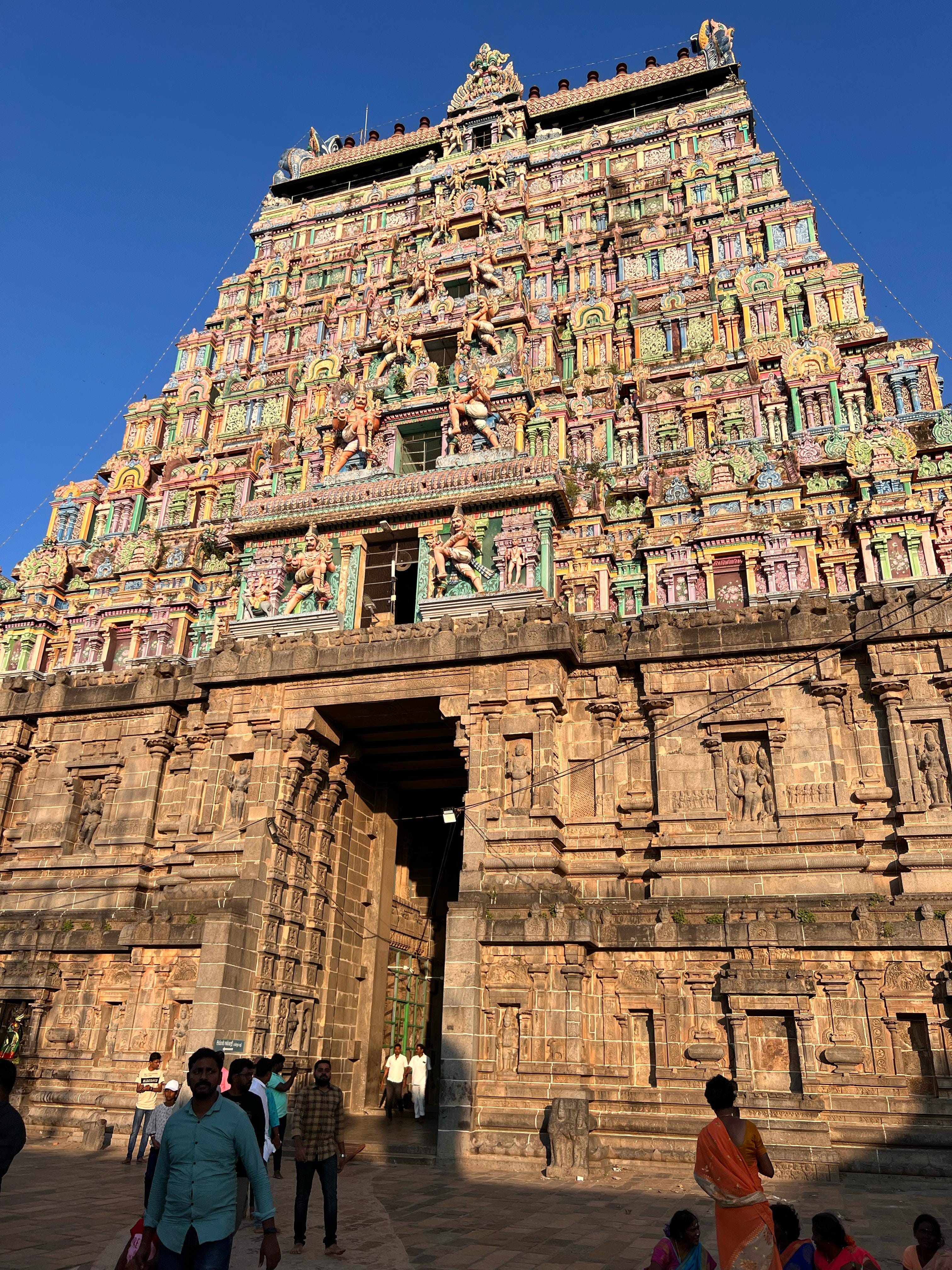
My body is absorbed by the current of moving people, carried along towards the heart of the structure. We have come at a holiday time in India, and the place is crammed with people. There is no room for personal space or polite distance. Something is happening at the far end of the room, a ritual bath of the god, I think. I crane my neck and try to see, but I am far too short to see much beyond the person in front of me. The woman next to me smiles and offers, “You don’t need to see. Feel.” And I agree. I close my eyes and drop into place. I feel the cold stone beneath my feet, the press and sway of the bodies around me, hear the chime of the bells from the distant ritual, accompanied by chanting from the crowd. Indigenous writer, Sean Kane, describes the “song of place” - a story the place tells itself, whether humans hear it or not. In those moments, in the temple, I can hear its song – not just of the people, but the vibration of the stone itself. My head tips back and I look up into the vast open space beneath the high ceiling, see a bird soaring over the crowd. I stay in the song and feel the energy of the thousands of days that came before this, captured and vibrating still in stone.
How, then, can we translate this kind of experience into the every day, the places we inhabit or visit? Certainly, we can’t visit all the places that have been claimed as sacred, sometimes not even the ones closer to home. Equally important, not all sacred places require a structure. Some of the temples in India have been dismantled and reconstructed many times over. When the British colonizers objected to such treatment of ancient buildings, they were told that it was not the building that was sacred, but the land it stood on. Where in our own little piece of the world can we recognize – or create - sacred land? How can we tend it with our love and with our energy to build it up and feed it?
I like to walk out barefoot in the morning and tend our little garden plot. Sometimes, I bring seed or new plants or water. Sometimes I feed it attention by just sitting and observing the sounds of the leaves in the breeze, the visitations by lizards or hummingbirds, the generous warmth of the sun shining down on us all, or the rare, cool scattering of rain. There is no temple outside my door, no stone echoing with the veneration of a thousand years. Yet, if each of us tends our own little patch, feeds it love, provides for the creatures that share it with us, those patches can grow into a network and we can all help the land reclaim its place as something to be revered instead of exploited; a living, breathing partner in our lives.
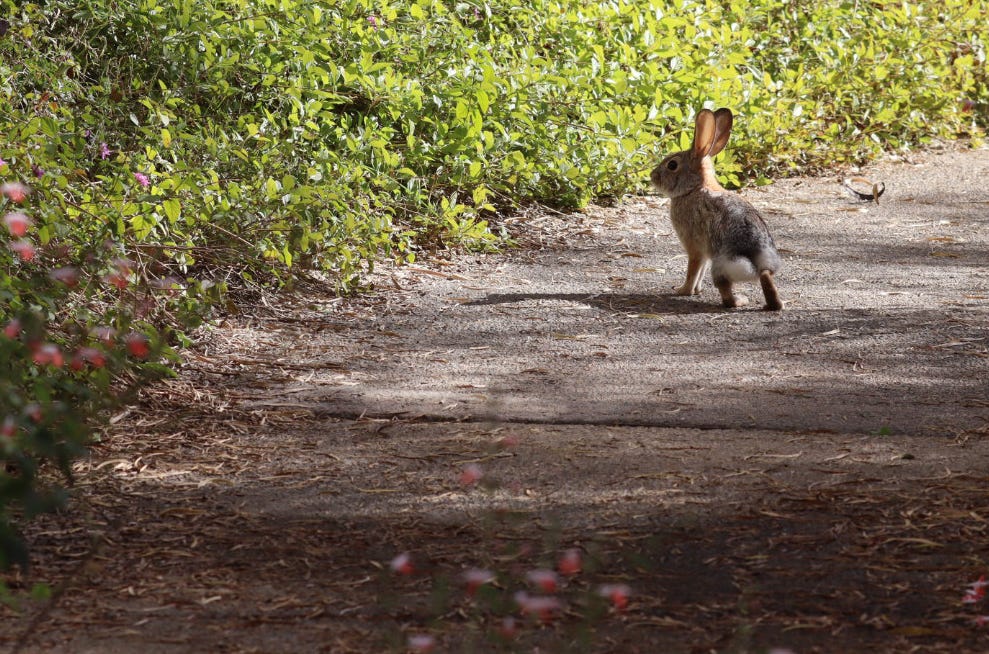
So, which patch could you tend? Are there natural places you gravitate to? It could be a tree, a window box, a local park, your own yard. Take a few extra moments to sit and gift it your attention. If you can, take off your shoes, place your feet on the earth, take a moment to ground down into that place, wherever it is. And just breathe. What do you notice? What does the place feel like, sound like, smell like? Are there other creatures sharing the space with you? Is there anything that pops up that you can do for this place or those creatures? Every square foot, every window box, every potted plant is a chance to tend the natural world, to show we care, to connect with others who are doing the same, and to connect ourselves to this beautiful planet we call home. Every action matters. Which one will you take?